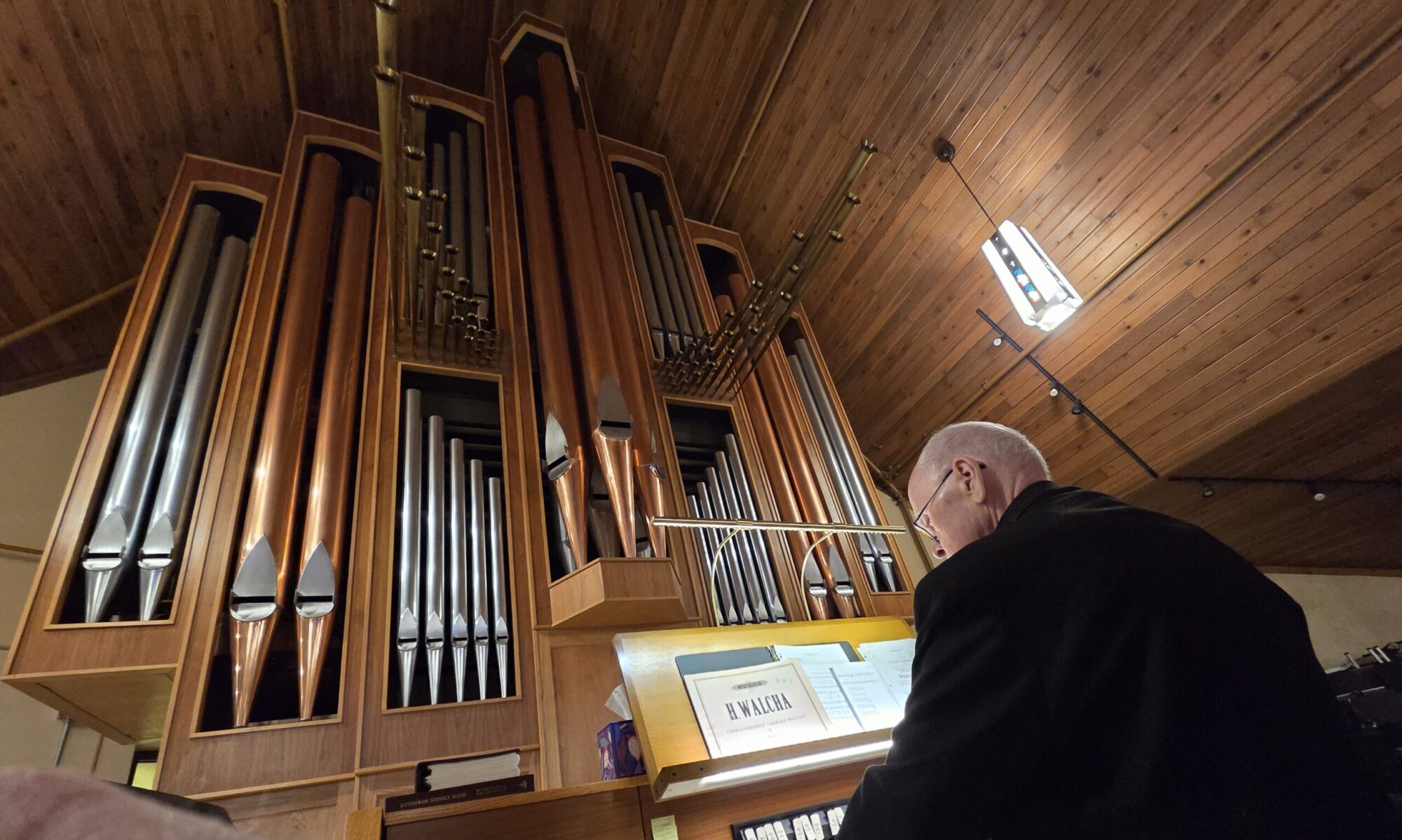
In today’s Gospel Jesus heals a man possessed by a demon. There were differing reactions. “When the herdsmen saw what had happened, they fled.” When the people from town came out and saw this man sane, clothed and sitting at Jesus’ feet “they were afraid” and “asked him to depart from them.” You see, on the one hand no one could deny what they saw with their own eyes. But instead of sensing and maybe believing a divine miracle they didn’t want anything to do with it. They rejected the miracle and the man who performed it. Continue reading “Demons Before Us”
Text: 2 Samuel 11:26—12:14
Date: Pentecost IV + Proper 6C + 6/12/16
Have you ever said, “I can forgive, but I can’t forget”? Many think that receiving forgiveness is easy but extending forgiveness to someone else is more difficult. Today’s “Lesson in Forgiveness” turns that around. Both the Pharisees in today’s Gospel (Luke 7:36—8:3) but especially King David in our Old Testament reading demonstrate that receiving forgiveness maybe isn’t always as easy as you might think. With a parable Jesus enlightened the Pharisees and Nathan the prophet broke through the hard shell of guilt bringing King David to true repentance and faith. Continue reading “A Lesson in Forgiveness”
Elijah was the mightiest prophet of God. Whereas all the other prophets are introduced to us with words like, “The Word of the Lord came to…,” Elijah the Tishbite just suddenly appears on the scene as if he needs no introduction, certification or proof. How different the apostle Paul who we heard today laying out the evidence of his argument to be a bona fide apostle even though he did not accompany the others “during all the time that the Lord Jesus went in and out among us, beginning from the baptism of John until the day when he was taken up from us” (Acts 1:21-22). Elijah was sent to call God’s people back from their infatuation with the latest religious fad, namely, the idolatrous worship of Baal. He simply shows up and predicts drought and famine, “except by my word,” that is that he would call an end to the punishment at the proper time. Continue reading “The Word of the Lord is Truth”
After the flood of God’s judgment against the increasing wickedness and sin of every person, God made a covenant through Noah with the whole world that He would never again destroy the earth by water. That’s God’s promise to everyone whether they believe or not. But the central covenant promise of God to everyone was of a Savior from sin and death for eternal life. This promise however can be rejected, ignored, cast aside, for it becomes effective only in those who receive it by faith, who believe it. First to Abraham God promised that through his descendant “all the nations will be blessed.” The promise is to all nations, every person. But it comes through Abraham’s line, God’s chosen people Israel. Yet it comes to all like it did to Abraham, namely, by faith. Continue reading “Unlikely Faith”
Text: Genesis 11:1-9
Date: The Day of Pentecost + 5/15/16
At first the connection between the Tower of Babel and the Day of Pentecost may seem obvious. At Babel God confused the one language and same words of people and at Pentecost God’s Word broke through the division of languages to proclaim the good news of Jesus Christ the Savior of the world. A closer look however reveals our own need of deliverance from sin and the great love of God who delivers us. To this end we prayed the Alleluia Verse on this day, “Come, Holy Spirit, fill the hearts of the faithful, and kindle in them the fire of your love.” Continue reading “One Language of Peace”
Text: Mark 13:24-37
Date: Last Sunday + Proper 29B + 11/22/15
It was after He entered Jerusalem for the final time, Jesus was sitting with His disciples on the Mount of Olives opposite the temple, the bright massive stones gleaming in the sunlight. Then He said, “Do you see these great buildings? There will not be left here one stone upon another that will not be thrown down” (Mk 13:2). Jesus predicted the coming destruction of the temple. Such a shocking prediction had to seem to the disciples almost unbelievable. But how many things, issues, happenings in our time once beyond belief to us have come and are coming to pass? It is here, just days before that final Passover, before our Lord’s death by crucifixion that Jesus not only foretold the destruction of the temple but also spoke of the Last Day and the coming Judgment and Deliverance of all the saints. Continue reading “My Lord, What a Morning!”
“The day is surely drawing near” declares our Hymn of the Day (LSB 508). For the last two Sundays of the Church Year our attention is drawn to that day, the Day of Judgment.
A review of the books most recently published by Evangelist Billy Graham reveals a Christian man (who recently celebrated his 97th birthday) thinking more and more about the Last Day, the Day of Judgment and of human existence beyond the grave. Listen to the titles. “Angels” (1995), “Nearing Home: Life, Faith, and Finishing Well” (2011), “The Heaven Answer Book” (2012), “The Reason for My Hope: Salvation” (2013), and his most recent work and possibly his last, “Where I Am: Heaven, Eternity, and Our Life Beyond” (2015). Today we heard Jesus predicting the Last Day saying, “Be on your guard…. But the one who endures to the end will be saved” (Mk 13:9, 13). The teaching that there will be a Last Day of Judgment is not only a New Testament one. We heard the prophet Daniel say of those who have died awakening, “some to everlasting life, and some to shame and everlasting contempt. And those who are wise shall shine like the brightness of the sky above; and those who turn many to righteousness, like the stars forever and ever” (Dan 12:2-3). So today we listen and learn and grow wise in the faith, as we say in the creed, the faith that “looks for the resurrection of the dead and the life of the world to come.” How shall we confront our own last day, our death to this world and entrance into eternal life with God? Continue reading “Those Who Are Wise Shall Shine”
Text: Mark 12:38-44
Date: Pentecost XXIV (Proper 27) + 11/8/15
As the closing chapters of the Church Year pass us by we are told not yet about the last days before the judgment but again of the last days of our Lord’s earthly ministry. Today it is Tuesday of the Great and Holy Week, only three days before Jesus’ ultimate goal. He has been confronted by His enemies while He finishes teaching in the Jerusalem temple. Today He warns everyone against the unfaithful scribes and teachers of the Law. Then He has us notice the contrast between the rich folks putting in large sums of money in the offering box and a poor widow’s measly offering of only two small copper coins. I suppose the temptation weighs heavy for a pastor to preach a stewardship sermon on this text. It is after all budget planning time for the next year. And there are a couple of themes related to good stewardship principles. But this is Tuesday of Holy Week. And there is much more here of much more importance. Continue reading “At the End of the Day”
Text: Mark 10:17-22
Date: Pentecost XX + Proper 23 + 10/11/15
Today’s Gospel is about God’s love for the whole world of sinners and His desire that all should come to a knowledge of the truth and be saved (1 Tim 2:4). That truth is the necessity of understanding the difference between the idea that a person can be saved by works of the law on the one hand and salvation by God’s grace, by repentance of sin and faith in Jesus Christ on the other. Continue reading “He Loved Him.”
Text: Mark 10:2-16
Date: Pentecost XIX + Proper 22 + 10/4/15
When asked to explain how the real body and blood of the Lord Jesus become present in the bread and wine of the sacrament of the altar, the Roman Catholic Church relies on the philosophical reasoning called Transubstantiation. That is, since one thing cannot be two different things at once, the bread and wine on the altar cease to exist except for what’s called their “accidents,” and the elements are transformed into the body and blood of Christ. Maybe it is because of some lingering doubt that you hear it popularly referred to as “the body and blood, soul and divinity of Christ.” Continue reading “Male and Female. Therefore….”