He Has Done All Things Well

Text: Mark 7:31-37
Date: Pentecost XIII
+ 08/26/07

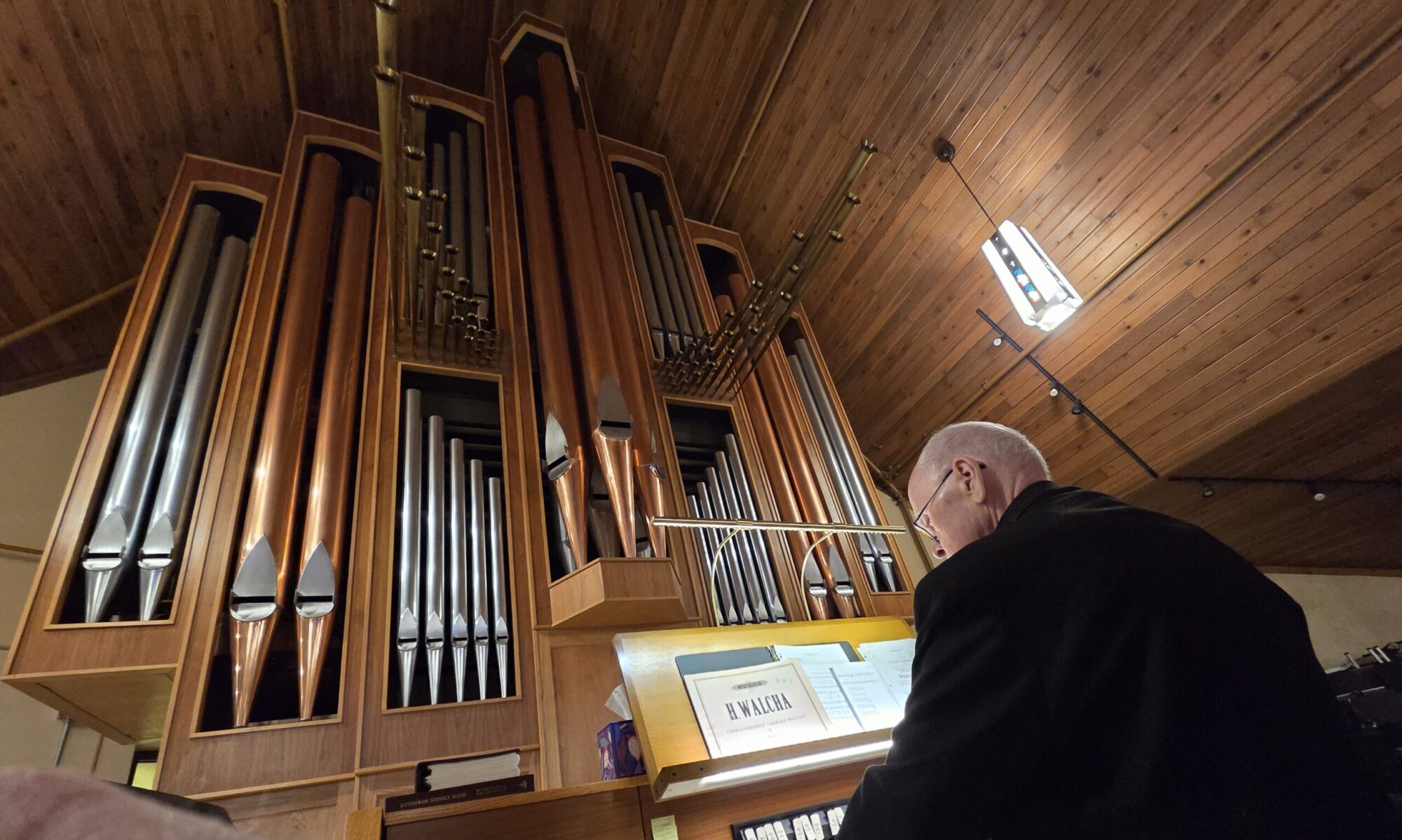
     Well, here we are. It has been not quite ten months since two congregations lost their pastors at nearly the same time. They “lost” them not due to the receiving and accepting of another Call, not because of death, nor because of false doctrine, nor because of inability to perform their office. One resigned out of a theological conviction of conscience contradictory to the Lutheran Confessions. The other resigned out of a certain compassion in the face of sinful hostility. So we, you and I, were brought together through a truly strange turn of events. But God is in the business of redemption and the business of blessing even and especially in the middle of the messes we make or find ourselves in. And so it has been my privilege to serve as your Vacancy Pastor in this time to this day.

     This day, however, we rejoice that the Lord of the Church has blessed you and provided for you your next under shepherd and pastor, the Rev. Larry Loree, Jr. Much preparation has gone in to providing for a holy, reverent and joyful Mass of Installation this afternoon. God has indeed been gracious, for these days it is quite unusual for a congregation to have to deal with a pastoral vacancy for less than a year! There have been many things that have had to go on hold or be endured as unusual, or maybe even frustrating because of the vacancy. My task has been to keep as many things going as normal as possible without undue change, in accordance with the Lutheran Confessions, as well as to help prepare things for the new beginning that we will begin this afternoon. The crowds of people in the area of the Decapolis in today’s Gospel said of Jesus, “He has done all things well.” It is hoped that I have not, at least, messed things up more than they were before.

     For everything else, the most important thing is always the preaching and hearing, the believing and living of the Gospel of the Lord Jesus Christ. Oh, how often we forget that as we let petty concerns over lesser things raise our blood pressure or cause divisions in our unity and brotherhood! Let this be a day to put all that behind us and together embrace one another in the joy and hope, the faith and love that are the Christ Jesus our Lord (2 Tim. 1:13).

     “Embrace” is the right word. For the Gospel word always comes to us through physical, outward means. The Lord Jesus healed and restored many people with nothing but a word, “be healed,” “be it done to you as you believe,” “go, your faith has made you well,” “Lazarus, come out!” But sometimes he went “out of his way,” as in the case of the man in today’s Gospel who had lost his hearing and had a speech impediment. Rather than merely laying on his hands in some magical way, as the people who brought the man to Jesus expected, Jesus took him aside privately, stuck his sacred fingers into the man’s ears; then he drew the man’s attention to his tongue by spitting and then touching the man’s tongue, “and looking up to heaven, he sighed” as in prayer. Then the man saw Jesus say something. Could he read the Savior’s lips? (Mouth:) “Ephphatha.” Or was this the first word he heard as Jesus spoke it, “Ephphatha,” “Be opened”? For, suddenly the man’s ears were opened and he began to speak plainly.

     This is the way the Gospel comes to us, namely, through the external means of the Word and the Sacraments. When we do not despise the external Word and Sacraments but hear the Word, trust in God’s baptismal promise and believe and receive the Sacrament of the Altar, the Holy Spirit of Christ is present to open our ears and release our tongues to praise and witness. “Everyone should take care, therefore,” wrote Martin Luther, “to be found on this path and gladly hear God’s Word. Without the Word, God does not reveal himself in your heart. To see and know him can happen only through the external Word and Sacraments…. Surely none of us would hesitate to travel a hundred miles to a certain church if we knew God himself were going to speak and preach there; everyone would then want to hear his voice. Now, instead, our Lord God says, I will arrange things closer for you, so that you don’t have to travel so far; listen to your parish pastors, your father and your mother, and you will then hear me; they are my disciples and office bearers; when you hear them, you hear me.”

     The most important thing is always the preaching and hearing, the believing and living of the Gospel of the Lord Jesus Christ, because HE is the One who has done all things well. When the people of the Decapolis said that, of course, they only knew part of the story. They were impressed with the miracle of restoring hearing and speech to this man. Maybe they were even impressed with hearing a sermon or two of His. It’s easy to praise and laud someone when things are going well, when daily life with its little frustrations and concerns is the biggest obstacle to happiness. St. Mark ends the first half of His Gospel on this positive note. But beginning with the very next chapter things became more messy. It began with St. Peter’s confession, “You are the Christ” [Mark 8:29 (ESV)]. Little did he know at the time that that same joyful confession would eventually lead to his own death by martyrdom. For, so it was for our Lord. It ended in the rejection of Jesus as a criminal and death on a cross. From the looks of things at his arrest in the garden, through the fixed trials, the jeering of the crowds and the nails and spear and manifold disgrace on Calvary, apparently He had not done all things well. But appearances can be deceiving. For when a Roman centurion “who stood there in front of Jesus, heard his cry and saw how he died,” he joined in Peter’s confession, saying, “Surely this man was the Son of God!” [Mark 15:39]. The confession of faith is most powerful when it is squeezed out through lips pursed with anxiety—the anxiety of true repentance brought about by the glory of the sacrifice of Christ on the Cross. For our true and highest need is deliverance from sin and death. And there is only one remedy—Christ and Him crucified and risen again.

     The crowds were right, even though they didn’t know yet the whole story. Jesus Christ has done all things well. For by His perfect life and compassion and His all-atoning death and mighty resurrection He alone has opened the kingdom of heaven to all believers. By the Holy Spirit working through the Word He makes enemies into friends, sinners into saints, raises the dead, gives sight to the blind and hope to the hopeless. Christ not only did and does all things well, He makes repentant sinners well, and more than just well, but alive, really alive forevermore.

     Jesus put His fingers in the man’s ears and touched his tongue and spoke the liberating word, “Ephphatha.” When God saw our helplessness He waved no magic wands and spoke no meaningless words but caused His Word to become flesh, to get right down here in the dirt with us. That’s what the name “Emmanuel” means—God with us! The Savior’s touch healed many, turned a few loaves of bread and a couple of fish to feed thousands miraculously in the wilderness. Finally those sacred hands were nailed to a cross. So to this day Christ employs the fingers and feet, the heart and lips of pastors and parents and Christian disciples to deliver His Word and Sacraments, His gifts of healing and release from the grip of sin and death. In Christ the Word became flesh so that our flesh might be given eternal life. It is only by faith that we can say of the whole story of Christ, “He has done all things well.”

     Of course, there is coming a day when every eye will see Him and every tongue compelled to confess, “He has done all things well,” for Jesus is Lord to the glory of God the Father. For the hour is coming, “and is now here, when the dead will hear the voice of the Son of God, and those who hear will live.” Then “an hour is coming when all who are in the tombs will hear his voice and come out, those who have done good to the resurrection of life and those who have done evil to the resurrection of judgment” [John 5:25, 28-29].

      I commend you to this Gospel, this Word, this Savior who has done and will do all things well. In closing, in this 125th anniversary year of Zion congregation, let me use as my last words the words of Zion’s third pastor, Rev. Kenneth Runge, at his retirement:
           “In the years that lie ahead, I hope that this congregation is going to prosper mightily under the grace of God and be a true light of the world and a city set on a hill that cannot be hid…. I pray for this parish that it may become ever stronger even when my ministry is at an end, that it will go to greater heights, and that the influence of Zion and Christ through her will remain in this community for many years to come.”

Jesus, Our Propitiation

Text: Luke 18:9-14
Date: Pentecost XII
+ 8/19/06

     What is bothersome about this little parable of our Lord is how easy it is to focus on the two characters presented and not on Jesus! It is easy to contrast the boastful attitude of the self-righteous Pharisee with the humble and repentant attitude of the tax collector. But so what are we to make of that? That it is bad to be proud, arrogant and boastful and that it is good to be humble? While that may be true and, indeed, a worthy lesson for us to learn, to make that in itself the point of this story is to completely miss the Gospel. For, so what if you take this parable to heart and watch yourself to make sure that you act always in the greatest humility? Is not boasting of humility just as self-serving as boasting of self-righteousness? The point is one could preach on this text without hardly mentioning Jesus Christ, or the good news of the Gospel.

     The Law reveals our sin and need of a Savior. That Law is certainly there in the very first words introducing the parable: Jesus “told this parable to some who trusted in themselves that they were righteous, and treated others with contempt.” This is the person who has forgotten or never knew the scriptural diagnosis of all mankind that says, “no one living is righteous” (Ps. 143:2), and “all have turned aside, there is none who does good, not even one” (Ps. 14:3). The Pharisee’s proud, self-righteous attitude is almost embarrassingly plain and we all, with eyebrows raised, easily condemn him. But as soon as we begin, like him, to think of examples among our acquaintances, wishing, maybe, that ol’ so-and-so would hear these words, we are condemned as no better. And what of the humble, repentant tax collector? This too can be only condemning Law if all we get from these words is an example for us to emulate, the conclusion being that we, too, should be so humble and repentant, for we know that we are not humble. And if we try to act humble, is it not, after all, just an act?

     The Gospel in this parable is to be found in its setting, in the particular plea of the repentant tax collector, and, of course, in the Person telling the parable.

     First, it is significant that these two, the Pharisee and the tax collector, came to the temple to pray. The time for public prayer was at 9 a.m. and again at 3 p.m. This is the time of the atonement sacrifice when the blood of the lamb was offered to cover the sins of the people. The temple and the blood pointed forward sacramentally to the flesh and sacrifice of Jesus which, by the way, remained only days away! It is alone by that sacrifice, by the blood of Jesus, that all sin is covered, forgiven, forgotten by God and removed. Jesus is the Lamb of God to whom the temple and all the sacrificial lambs of Israel pointed, who takes away the sin of the world. Was the Pharisee relying on the benefits of the sacrifice he had just witnessed? That is doubtful as, in his prayer, he repeatedly referred not to God’s provision and gift, but only to himself, saying, “I thank you that I am not like the rest…I fast twice a week; I pay tithes on everything I obtain.” As seemingly “righteous” as the Pharisee appeared to be outwardly, the “twist” in Jesus’ parable is that not this Pharisee, but the despised but penitent tax collector “went down to his home having been declared righteous” by God.

      You see, only the tax collector discovered the Gospel, as is revealed in his particular repentant prayer. He prayed, “God, be merciful to me, a sinner.” Normally the word translated “mercy” is that word you are so familiar with in the liturgy, the Kyrie, Eleison. But the tax collector, “standing at a distance,” not putting himself forward at all as did the Pharisee, his eyes cast down and not “up into heaven,” beating his chest, said not “O God, Eleison/have mercy on me,” as did the blind man (18:38-39), or the ten lepers (17:13). Rather, and significantly, he said, “O God, (hilasthaitee),” which means, “O God, be propitiated toward me.” Expiation and propitiation refer to the cleansing and reconciliation of the sacrifice of atonement. He was pleading for God’s mercy and grace not on the basis of anything in himself but solely on the basis of God’s gift of forgiveness through the sacrifice God himself provided, as he just witnessed in the temple. The Law of God always talks about you and your works. The Gospel is always about what God does, what He gives and provides as a gift on our behalf. So the repentant tax collector stands not only as an example but as a proclaimer of the Gospel, God’s action and gift on our behalf by sending the Savior to cancel our sin and debt by His atoning sacrifice and to open the gates of His everlasting, loving mercy and grace.

     Furthermore, the Gospel makes all the difference also with regard to a person’s relationship and view of others. The self-righteous Pharisee looked with contempt toward others, comparing himself with the despised tax collector. How many of us have not breathed a sigh of relief as we see others caught in poverty, drug abuse or some sinful life style and thanked God that we were not so unfortunate or tempted? The tax collector, on the other hand, admits not only that he is a sinner but that he is “the sinner”! In comparing himself to others, he does not claim to be better; rather he knows and confesses that he is worst of all. As St. Paul said in today’s Epistle, “For I am the least of the apostles, unworthy to be called an apostle, because I persecuted the church of God” (1 Cor. 15:9); and as he wrote to Timothy, The saying is trustworthy and deserving of full acceptance, that Christ Jesus came into the world to save sinners, of whom I am the foremost. But I received mercy for this reason, that in me, as the foremost, Jesus Christ might display his perfect patience as an example to those who were to believe in him for eternal life” [1 Tim. 1:15-16 (ESV)].

     So while this parable warns us against Pharisaical boasting and self-righteousness and invites us to the humility of true repentance, it locates the only way to such humble faith in the sacrifice of Jesus, the Lamb of God, and in God’s declaration as righteous those who confess their total unworthiness and helplessness and trust solely and alone in the atoning sacrifice of Jesus’ body and blood on the cross. How does the old hymn say it? “Nothing in my hand I bring, Simply to Thy cross I cling” [LSB 761:3].

      It all boils down to a simple matter of whom do you trust for your salvation—yourself, like the Pharisee, or God and the atoning sacrifice He has provided, as does the tax collector? That atoning sacrifice is Jesus, as that word the tax collector used in his prayer is found only one other time in the Bible, in the book of Hebrews:
   “Therefore he [Jesus] had to be made like his brothers in every respect, so that he might become a merciful and faithful high priest in the service of God, to make propitiation for the sins of the people” [Hebrews 2:17 (ESV)].

     And as for whether we compare ourselves to others, holding others in contempt or in mercy, “Have this mind among yourselves,” writes St. Paul, “which is yours in Christ Jesus, who, though he was in the form of God, did not count equality with God a thing to be grasped, but made himself nothing, taking the form of a servant, being born in the likeness of men. And being found in human form, he humbled himself by becoming obedient to the point of death, even death on a cross. Therefore God has highly exalted him and bestowed on him the name that is above every name, so that at the name of Jesus every knee should bow, in heaven and on earth and under the earth, and every tongue confess that Jesus Christ is Lord, to the glory of God the Father” [Philippians 2:5-11].

           Jesus Christ is our propitiation; the sacrifice that alone reconciles us to the Father and the Father to us. Let our prayer be, “O God, be merciful, be propitiated toward us sinners.” Then seal that prayer as you participate in the sacrifice of Christ, receiving his precious body and most sacred blood, knowing also that “because there is one bread, we who are many are one body, for we all partake of the one bread” (1 Cor. 10:16-17). Then you will be able also to love your neighbor as yourself.

One Thing is Necessary

Text: Luke 10:42
Date: The Dormition of the B.V.M.
+ 8/15/07

“One thing is necessary. Mary has chosen the good portion, which will not be taken away from her."

It is good to remember those who have died in the faith of Christ. Every Lord’s Day in the Prayer of the Church we commend to the everlasting peace of God those who have departed with the sign of faith and now rest in the sleep of peace. Because of our Lord’s saving work and His resurrection, and because in Holy Baptism we have already died and been buried with Christ, physical death, while it is still the enemy, has been overcome and transformed to be no more threatening than sleep—a “sleep,” however, that is fully aware of the joys of being with the Lord.

We remember especially those closest to us, a Christian father or mother or other relative; a Christian pastor or teacher from whom we heard and learned the “one thing needful,” the blessed Word and Gospel of Christ. This year we’ve remembered especially former Zion Pastor Eugene Evans and, not too long thereafter, also his wife, who were taken to be with the Lord, and now only this week also young Pastor William Thompson of Our Savior congregation in Hartland whose Christian funeral will be there tomorrow morning at 10:00 a.m. Beyond that Holy Church remembers especially those of the household of faith who were given special grace in the service of the Lord—the holy Patriarchs, Prophets, Apostles and Martyrs, as examples for us of steadfast faith and holy living. We commemorate especially the apostles of the Lord usually on the anniversary of their death or martyrdom, their “heavenly birthday,” the date handed down to us through the long tradition of the Church. How much more so, then, should we remember the most blessed woman that ever lived, the Blessed and ever-virgin Mary, the Mother of Our Lord, who has always been and is an icon, a picture of the Church and the calm faith of every Christian?

Though it was a different Mary, the same can be said of the Blessed Mother and of all Christians, “one thing is necessary. Mary has chosen the good portion, which will not be taken away from her.” Like us the mother of our Lord chose the one good and necessary thing because the Lord God first chose her. Her humble and obedient faith responded to the angel of the Lord, saying, “Behold, I am the servant of the Lord; let it be to me according to your word” (Luke 1:38). That is the prayer, the motto of all true faith that is born of the Word of God, that thrives and grows and hopes in the truth and promises of God.

It was by faith in the Word that the young Virgin Mary received and bore the only Son of the Father giving Him to take on our human flesh and blood. It was faith given, as she was filled with the Holy Spirit, that sang, “My soul magnifies the Lord and my spirit rejoices in God my Savior.” It was faith that perceived and kept her Son’s words and works, pondering them in her heart. It was by faith that Mary told the attendants at the wedding in Cana, “do whatever He tells you,” even when she herself did not know exactly what He would say. It was faith alone, pressed through the agony of her Son’s crucifixion and death that enabled her to remain steadfast also to see her risen Lord. This same gift of faith, then, transforms also her death and ours, turning the grave to be but the gate to our resurrection and the eternal life of the world to come.

The most ancient, holy tradition suggests not that Mary never died. For she was neither immaculately conceived nor spared from the suffering of the sin that is but common to all the sons and daughters of Adam. Yet this same holy tradition claims that, not long after her death, her body was raised to join with the likes of Moses and Elijah…and her Son and Lord to be with the Lord in both soul and body. In her, as in the Church, both time and eternity have met. From her body the eternal Son raised our human nature to participate in the divine nature. The salvation He came to bring, therefore, more than restores our human nature to be what God originally intended it to be, but raises us to be fellow heirs with Christ who bestows on us a crown of life.

It is good for us to remember those who have gone before us with the sign of faith, the great cloud of witnesses who surround us and cheer us on “to run with endurance the race that is set before us, looking to Jesus, the founder and perfecter of our faith, who for the joy that was set before him endured the cross, despising the shame, and is seated at the right hand of the throne of God,” that we may not grow weary or fainthearted (Heb. 12:1-4).

In this same faith we are all called to be like Mary—the Mary who ponders the Lord Jesus in her heart, the Mary who carries the flesh of God in her own flesh, the Mary who hears and takes to heart the Lord’s Word, the Mary who knows the one thing needful and chooses the good part that will not be taken away from her, the Mary who lives by the motto, “Let it be to me according to Your Word.” For to all who possess such faith the Lord speaks His blessing, “Blessed are those who hear the Word of God and keep it.” As we imitate Mary in faith, may we also imitate her in death—that is, falling asleep in peace, surrounded by angels and archangels and all the company of heaven, to be held safe and secure in the holy arms of our Lord Jesus Christ and finally to be raised to eternal life in the new heavens and earth.

Precious in the sight of the Lord is the death of His faithful ones. May holy Mary and all the saints plead for us with the Lord, that we may be helped and saved by Him who lives and reigns forever and ever.

Weeping Over the City

Text: Luke 19:41-48
Date: Pentecost XI
+ 8/12/07

     There are only two accounts of Jesus weeping recorded for us. One was at the grave of His good friend Lazarus (John 11:35). The other is here (Luke 19:41). The prophet Malachi said that the Lord, the Messiah, would one day appear and visit His holy temple. The word for “visit” is the same word for an overseer or bishop. The Lord Jesus visited, came as the Lord and owner of the temple the first time only 40 days after his birth when he was presented as holy before the Lord (Luke 2:22). The second time of which we have record was as a twelve-year-old, sitting at the feet of the teachers. Now, after His three-year earthly ministry of preaching, teaching and healing, having bound Satan at His temptation in the wilderness, and calling disciples to himself preparing them for the climactic event for which He came, He finally drew near to Jerusalem and the temple for the last time. In Jesus God had transferred His promised gracious presence from the stone and mortar of the temple to the flesh and blood of His incarnate Son. In Jesus God “visited” His people as the fulfillment of everything the ancient temple stood for.

     After His humble entry into Jerusalem to the raucous welcome of the cheers and Hosannas of the crowds, before actually entering the city, however, He paused. In the sunlight He saw the bright, gleaming walls of the temple, and he was moved to tears. He wept over the city, saying, “Would that you, even you, had known on this day the things that make for peace! But now they are hidden from your eyes.” He wept because the city whose name was peace (salem) would soon be a city forsaken of peace as she would blindly reject their Messiah, their Lord and God, and crucify Him. They rejected Him and crucified Him out of ignorance—ignorant of “the things that make for peace.” Even as He was dying He prayed, “Father, forgive them, for they are ignorant, they do not know what they are doing.” Surprisingly, that forgiveness would come as a result of His very death where He died not for Himself, but for them and for all; the vicarious atonement in His body for the release from the bondage of sin, the forgiveness of sin and the life of the whole world!

     Jesus wept. He wept because he knew of their rejection of Him and the destruction that awaited this beloved city of God as He described it in terms of the physical destruction of the city and the temple, which, indeed, happened in 70 ad. But even more he wept because the people “did not know,” that is, did not believe that “the things that have to do with peace” are all wrapped up in God’s visitation in His Son, Jesus. Whereas even a blind beggar knew and believed who Jesus really was, those who could lay their eyes on Him saw only a radical rabbi, one demon-possessed, an enemy of both the state and the religious establishment.

     Jesus still weeps. He weeps over Detroit and over every city and citizen that rejects Him today, that does not recognize Him for who He is, that does not know the things that have to do with peace. But the divine weeping is even greater today since ignorance is no longer an excuse. For the truth of sin and God’s deliverance from sin by faith in His Son has been and is being preached to the whole creation. As St. Paul said it, “so they are without excuse” (Rom. 1:20). Oh, there are, more today than in years past, people who are ignorant of God’s truth, who have never heard the Ten Commandments, the Law of God that condemns and convicts sinners, and the Creed, the Gospel of God that proclaims the wondrous gift of the Savior from sin and death. But the Voice, the Hands and Feet of Christ are still here; the Church in all her members still give witness and testimony to God the Savior “who desires all people to be saved and to come to the knowledge of the truth” (1 Tim. 2:4).

     Admittedly, the Church’s voice is very weak today. It is weak not only in numbers and volume but also where the one message of sin and grace, judgment and deliverance, the message of the Gospel of Jesus Christ and Him crucified is, in many places, covered over with a message of mere happiness, mired in mere moralism, avoiding talking about what’s really important—sin and righteousness, judgment and deliverance, actually emptying the cross of Christ of its power (1 Cor. 1:17)—its power to convict of sin, to bring to repentance and to give the only deliverance there is.

     In this way the Church of today is little different than the temple of Jesus’ day. Notice that before He begins preaching and teaching in the temple, it first had to be cleansed, cleaned up, straightened out, making it a fit place for His teaching. He quite violently drove out those who treated the holy place as no different than a shopping mall. It always shocked me, really befuddled me when, in a former parish, the people designated to count the offerings for the day showed up for that task after church, but had not attended the service themselves! It apparently never even crossed their mind the hypocrisy. I felt embarrassed for them and hardly knew what to say (for which I repent in tears). The money is meaningless, even detrimental to the entire enterprise unless the heart, first, is in the right place…the place of repentance and faith. "It is written, ‘My house shall be a house of prayer,’ but you have made it a den of robbers." And so there is weeping—divine weeping not only over the city and the world but even over the very house set apart to be the house of prayer.

     But then there is also cleansing, the visitation, the overseeing of the Church, in spite of all its wrinkles and waywardness, its spots of decay and weakness, by the Bishop and Overseer of our souls (1 Pet. 2:25), by whose blood we are cleansed from all sin, who “loved the church and gave himself up for her, that he might sanctify her, having cleansed her by the washing of water with the word, so that he might present the church to himself in splendor, without spot or wrinkle or any such thing, that she might be holy and without blemish” (Eph. 5:25-27). This is the reality, this is what Christ sees when He looks upon His Church. For all her outward weakness and waywardness, where His Gospel is preached in its purity and the sacraments administered according to His institution there is He standing in grace and mercy—mercy to forgive, and grace to renew and to strengthen and to save.

     The last word of our text: “The chief priests and the scribes and the principal men of the people were seeking to destroy him, but they did not find anything they could do, for all the people were hanging on his words.” Jesus is put to death by the chief priests and the Pharisees. But the people continue to respond to him with favor. Throughout Luke’s Gospel the people represent the faithful remnant of Israel who are positively inclined toward Jesus and his teaching. They remain faithful to him throughout even most of his day of crucifixion. They are what we are called to be: hearers of the Word, attentive hearers of Jesus’ teaching in the temple. For it is only His Word that can make sense…faithful sense of everything else.

           Jesus wept. He shed tears of sorrow over the city because of unbelief. He broke in grief when He saw what death was doing to the mourners at the grave of Lazarus. He agonized in the Garden of Gethsemane over the price He was soon to pay for the sin of the whole world. But those same blood-shot eyes became bright again as, in His resurrection from the dead, He brought life and immortality to light for all who hear the Word of the Gospel, repent and believe. For His death and resurrection are the only thing that makes for peace. By faith in Christ alone do hearers of the Word have the hope of the world to come, where “They shall hunger no more, neither thirst anymore; the sun shall not strike them, nor any scorching heat. For the Lamb in the midst of the throne will be their shepherd, and he will guide them to springs of living water, and God will wipe away every tear from their eyes” (Rev. 7:16-17).

Looking at Everything through Theological Eyes

Text: Luke 21:25-26
Date: Pentecost X Wednesday + 8/8/07

           The short pericope we just heard is from the larger section of Luke’s Gospel where Jesus is speaking about signs and warnings about the end times. The first part consists of words predicting the destruction of the holy city of Jerusalem, which took place in 70 ad. Suddenly, however, Jesus addresses the ending of the whole world as we know it, signs that are to point to His second coming in judgment and deliverance. He speaks about the sun and moon and stars being shaken. These are all signs that the world is coming unglued. God’s orderly creation—the predictability of sunrise and sunset, the tides of the sea coordinated with the gravitational pull of the orbit of the moon, even the stability of the stars used for navigation at sea—all these, and more, will become unstable and revert toward chaos. The reason for all of this will escape many. Jesus says there will be anguish and perplexity among people who are not hearers of the Word. But to those who “hear the Word of God and keep it,” Jesus’ words offer comfort and hope, for all these things are signs pointing to the coming of the Son of Man.

           These signs will be observable to all. But they will not be observed by most people as “signs” that have any meaning other than just random chaos and disaster. “Signs” are recognizable markers or events that point to a cause or meaning. In this sense take the recent collapse of the interstate bridge in Minneapolis. We view it as just random chance whether certain individuals were on that bridge at the time of the collapse or whether they were just approaching it or had just crossed it before it happened. That disastrous accidents happen to some people and not others at any given moment has no meaning in itself other than we are all vulnerable all the time to the suffering that is but the common lot of all mankind. Yet, for those who are and have been “hearers of the Word” we take every disaster, every occasion or form of suffering as a sign that points to our daily and constant need to repent of sin, that is, of our rebellion and separation from God. This is what it means to look at everything through theological eyes. Not a religious hallucination that tries to calculate a one-to-one relationship between a particular sinful act and God’s wrath or punishment, but a knowledge of the doctrine of sin and grace that sees always the ultimate cause of all suffering and death and the ultimate deliverance that is alone in the death and resurrection of Jesus Christ for the life of the world.

          The cataclysmic end of creation as we know it will be because God has withdrawn his benevolence. God’s goodwill toward the originally good work of his hands is increasingly turning into anger as his patience runs out with corrupt and perverse humanity. We have entered an age when the Church, those who are hearers of the Word, is becoming an increasingly smaller group. This is a sign of the end of all things. Whether the Last Day actually occurs in our lifetime, or whether this is just another historical phase to be followed by another awakening and then another falling away none of us knows. What hearers of the Word do know, however, is that these are times pointing to the need of all to repent, to turn and return to the Lord your God Who still shows Himself to be gracious and merciful, slow to anger, and abounding in steadfast love.

Faithfulness

Text: Luke 16:1-13
Date: Pentecost
+ 8/5/07

     Jesus said it simply, making it very clear: “You cannot serve God and money.” But when we hear that we get confused. How do we handle that? For isn’t that exactly what we as Christians are forced to do in this world, serve both God and money? Are not our days spent precisely with the task of juggling unrighteous wealth on the one hand and the true riches on the other without dropping either of them? So we don’t like to hear him say that, or at best just don’t understand.

     The parable is called “The Parable of the Dishonest Steward.” And that he is called dishonest poses something of a puzzle. We’ll agree that he was shrewd, clever, a sharp operator—but how, pray tell, can Jesus hold up a dishonest cheat as any kind of example for us? As the steward of a rich man he had been accused of graft, corruption, dishonesty, and though the charge had not yet been proven, without a hearing, without due process, the big boss simply ordered his dismissal. “What is this that I hear about you?” he charged. “Turn in your books. You’re fired.”

     This was obviously a crisis hour for that steward as those well know who, just as things were going smoothly and the bills were paid and the family had enough to eat and one could afford a round of golf at Oakland County prices, suddenly the job or position was gone. For some of us it would be like having social security cut off, the pension fund go broke, and losing all our investments at the local Savings and Loan. The steward lost his job and his options suddenly narrowed. His first option, of course, would be to fairly close out the accounts making sure that the master got his rightful claims, collect the outstanding debts and turning in the books with every cent accounted for. But his situation made him wonder whether he was really obligated to be sure the rich man’s pockets were lined at the expense of those less fortunate who owed the money. Wouldn’t it really be the wiser course of action, he thought, to be certain that this old skinflint got his due? His only other options were to get a job in the trenches and dig for a living, but he had this back problem in the lower lumbar region which would never tolerate that. Or option three was to get out and beg, but for that he was ashamed—a man of his position one day turning beggar on the next.

     And so the sleepless night went on. You know what that feels like, don’t you? Oh, maybe you were lucky enough to go to bed at your normal time, but when 4:00 a.m. came along, or 2:30 a.m. you were wide awake, making the coffee and finding out that there’s nothing worth watching on the tube at that hour in the morning. Finally, however, at last, the answer dawned on him, and he could plot a course of action. “By golly,” he said to himself, “I know what I’m going to do!” And so he called in the master’s debtors one by one, in private. “How much do you owe? How much is your mortgage? How large a payment do you have on the carriage in your garage?” And by a not-so-little manipulation of the books (actually having each debtor write out a “replacement” contract!) he reduced each of their debts and put them under debt to himself. He made friends with the wealth of unrighteousness. And in this way, out of gratitude to him, these new friends would help him through the crisis and make it possible for him to get another start. When the big boss heard about this, he could only shake his head in wonder, saying, probably, “Touché! That sly fox really got ahead of me on that one.” He was impressed because like good Americans he could recognize a fast one when he saw it. And the master commended the dishonest steward for his prudent wheel and deal. And there you have it: how to serve two masters at the same time.

     But now back to the surprising detail that Jesus, as he told this parable, seems to offer this dishonest steward as somehow an example for us to emulate. “For the sons of this world are more shrewd in dealing with their own generation than the sons of light” he says.

     Well, of course, it is not the dishonesty of the man that Jesus is recommending. The steward’s dishonest act made sense only by the moral standards of the world—looking our for number 1. We can recognize that easily enough.

     The main theme of the story is money, the unrighteous wealth—what one does with it, how one invests it, and, as importantly, what that money and the investment of that money does with us. And that’s perhaps the reason why this parable of Jesus is among the least familiar of his many parables, one to be avoided like the plague, for most of the difficulties people have with God and most of their attempts to escape him are not theological or doctrinal at all, but are found at the point where the unrighteous wealth gets mixed up in our lives—money, creature comforts, possessions, investments, taxes, interest rates—as from sunrise to sunrise one thought consumes us: how can I get enough, build my empire, insure security after 65, ignore the appeals of human need, and keep myself solvent and happy? The truth is we do not possess wealth so much as we are possessed by it, in bondage just as bleak as Israel’s in Egypt. We want to be rich in things, even as we are indifferent to being poor in soul.

     Now the truth is that our Lord was right not wrong when he said, “No servant can serve two masters.” But hear him out, please, to the end. That’s the way the children of the world maneuver and if they can be that sharp and prudent, clever and aggressive in the use of money for the service of themselves, then how much more so the sons of light should be in using money for the service of their God? And here it must be told what it means to live as children of light in the midst of the world, to be mixed up with the wealth of unrighteousness and thus to live with dirty hands, and yet, at the same time, to live joyfully under the forgiving goodness of our Lord. Jesus could commend this fellow because at least he used his money FOR something, albeit to serve his own ends (even as we so often do). But at the same time it serves as a demonstration of what the children of light can do on their level. The man had little time left. Soon he must be separated from all the wealth that he had in his charge, and so in that brief respite, he just let it fly. He gave it to people who needed it, performed a work of mercy, and by that work made friends.

     And this is precisely what Jesus turns into a parable for our own life, and what he means when he says, “Make friends for yourselves by means of unrighteous wealth, so that when it fails they may receive you into the eternal dwellings.”

     It is clear that all of us, likewise, have little time. One day we will be left destitute, when we will stand naked before God, stripped of everything in which we placed our confidence. We will stand before the throne of God without a house, without money, without reputation, in utter poverty. And in that place where money is neither received nor spent, where all our values have been turned upside down, in that place God will ask, “Who can testify for you?” And then perhaps there may be someone who will witness, “He once gave his last penny for me.” “He put me on my feet when I was a refugee,” and your God will say, “Blessed are you my faithful child. You have made the unrighteous wealth righteous, for you used it to feed the hungry and the poor, to clothe the naked.” We look over to see who it is that says he was helped by us and we see…Jesus, our faithful witness! “I was hungry and you gave me something to eat, thirsty and you gave me something to drink, naked and you clothed me.”

     It has been said that the only thing we can take with us is what we gave away to human need. Therefore, we can turn unrighteous wealth into righteous wealth. We can let it fly because it isn’t ours in the first place. We can spend it like it’s going out of style. We have been purchased from its slavery so that we don’t belong to money any more.

     The Lord who told this parable has cast new light across our pathway and around our lives, and in that light it is impossible for us to go furiously acting only in our selfish interests anymore, or even flaunting it to get the admiration of the throngs for selfish interests. In this light it can no more be called the wealth of unrighteousness, for now it is in your hands, the sons of light, where it responds in haste to hunger of the body and starvation of the spirit, pain and sorrow, poverty and need. That same dollar bill that passed through shady deals in the hands of greedy grafters, multi-million dollar athletic stars, that was laundered (a strange name I have to say) through Swiss Banks for drug kingpins, that dollar bill is now in your hands as the children of light. It has been redeemed because you are redeemed.

          It was overheard in a restaurant, in the next booth, someone making a joke, saying, “Jesus saves, but Moses invests.” Well, Jesus saves, indeed, but in the saving he has made a great investment, and the investment he has made is you. As the Apostle Paul said it, “This is how one should regard us, as servants of Christ and stewards of the mysteries of God. Moreover, it is required of stewards” not that they be found successful, but “that they be found trustworthy,” faithful [1 Corinthians 4:1-2 (ESV)]. Let that be the last word, then, that we take with us from this parable: “Be faithful unto death, and I will give you the crown of life” [Rev. 2:10 (ESV)].